GEO Audit vs SEO Audit: What Your Website Is Missing
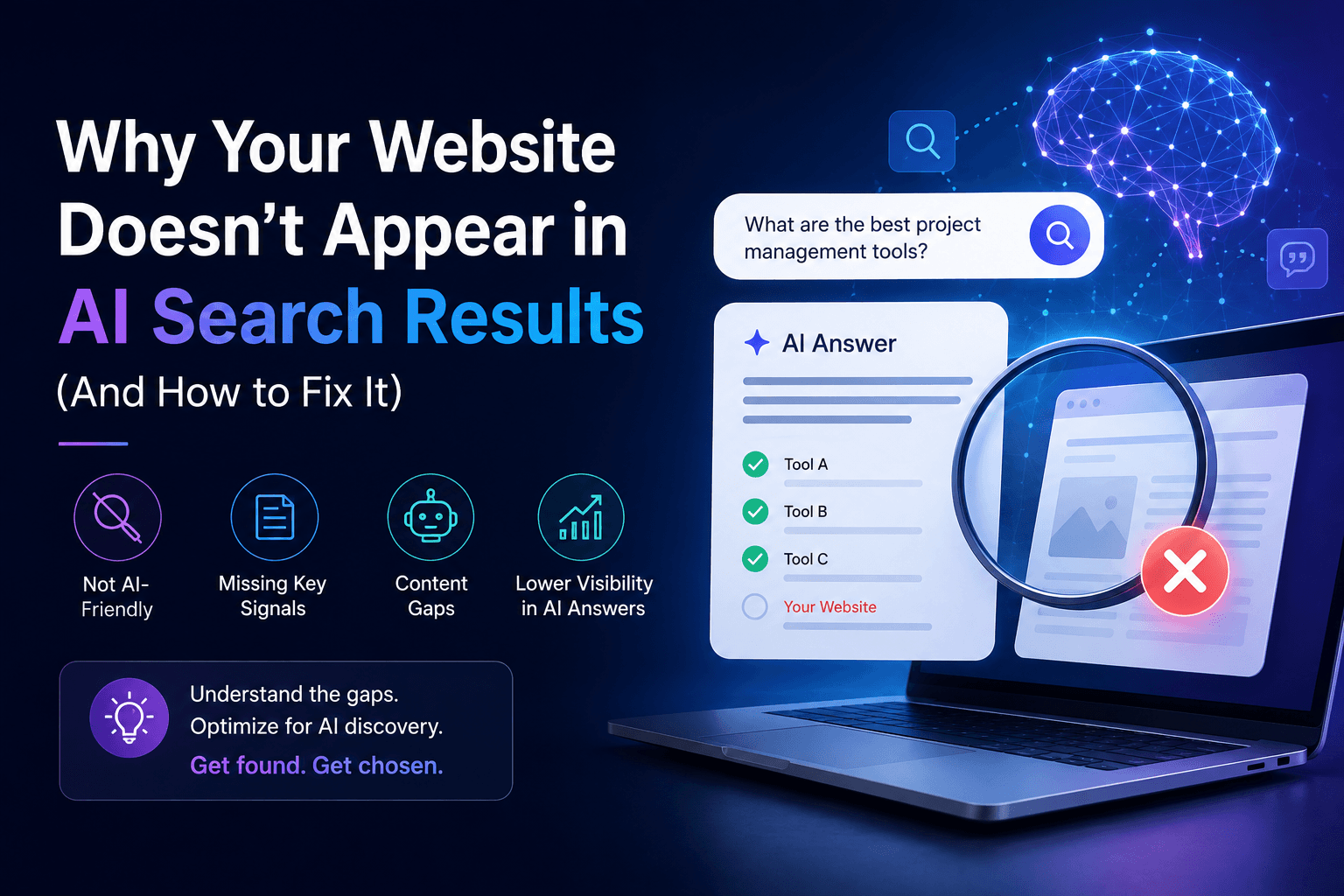
Your SEO audit looks perfect. 95+ Domain Authority. Clean backlink profile. Technical SEO optimized. Pages rank on Google. But here's the problem: you're invisible in ChatGPT, Claude, and Perplexity.
The businesses getting recommended by AI aren't necessarily the ones ranking #1 on Google. They're the ones optimized for GEO (Google's Generative AI Experience and broader AI systems). The ranking factors are completely different. The audit criteria are different. The optimization strategies are different.
This creates an incredible opportunity: While competitors spend resources optimizing for traditional SEO, you can capture market share by optimizing for GEO. Companies doing this are seeing 3-5x more customer acquisition compared to traditional SEO alone.
This comprehensive guide reveals the critical differences between GEO Audit and SEO Audit, shows you what your website is likely missing, and provides the complete audit framework to optimize for modern search. By the end, you'll understand both audit types and have a clear roadmap to dominate both traditional and AI-powered search.
Anavya AI Labs Team
AI & GEO Specialist - Enterprise AI Systems
Focus Areas
GEO Audit
SEO Audit
Search Optimization
AI Visibility
GEO Strategy
Content Audit
Website Audit
AI Search
ChatGPT Optimization
Claude Visibility
Perplexity Search
Semantic Search
Content Strategy
Authority Building
Review Management
Brand Visibility
Search Ranking
AI Discovery
Content Optimization
Website Optimization
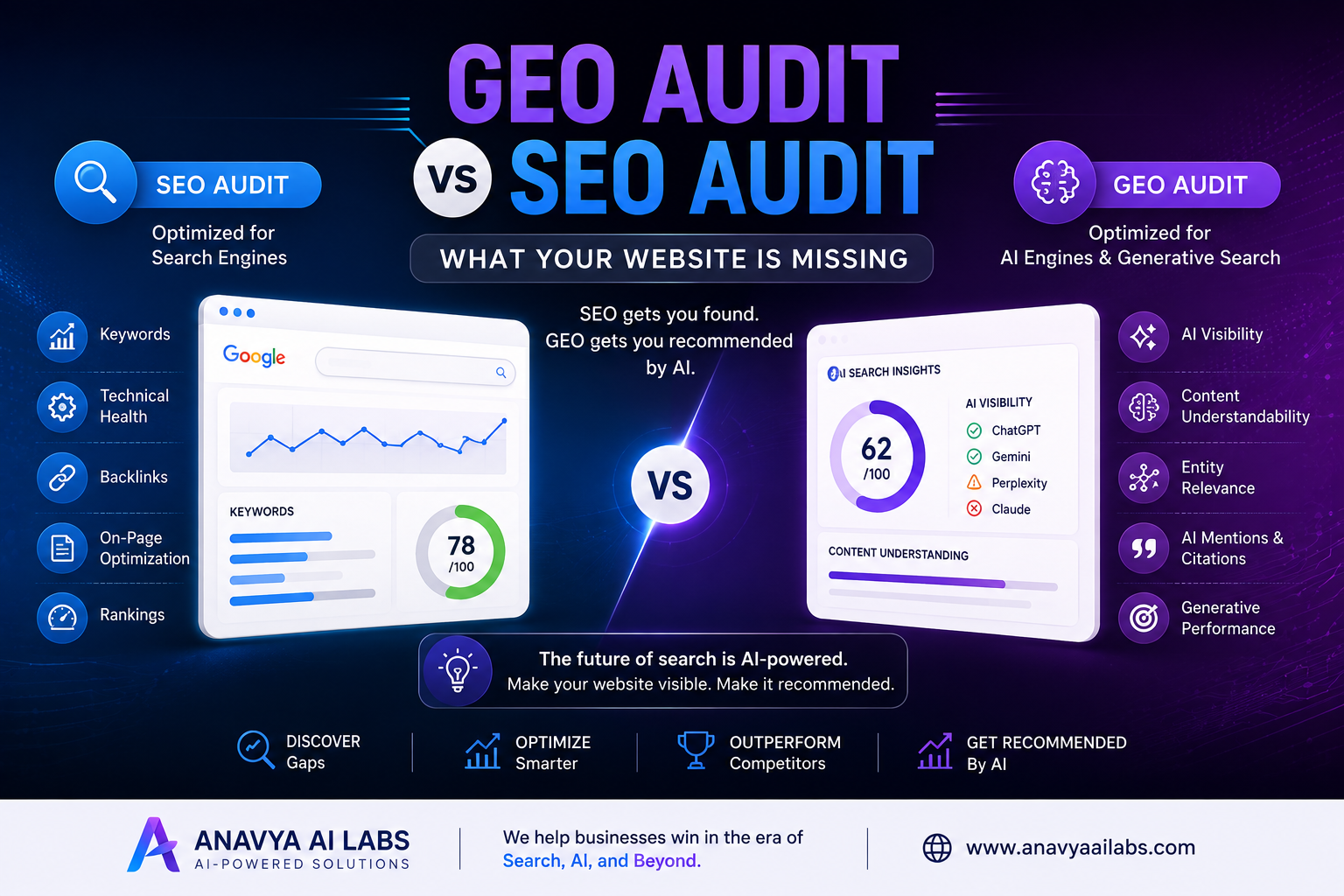
Master both GEO and SEO audits to dominate traditional and AI-powered search
AI Key Takeaways
- Different Audits, Different Results: SEO audits and GEO audits measure completely different things. You can rank #1 on Google and be invisible in AI search, or vice versa.
- GEO Factors are Customer-Focused: GEO audits prioritize customer satisfaction, authority, and problem-solution fit. SEO audits prioritize technical metrics and backlinks.
- Most Websites Fail GEO: 80%+ of websites optimized for SEO fail GEO audits. They have poor reviews, weak authority, and feature-focused messaging.
- The Audit Gap is Your Opportunity: The gap between what websites optimize for (SEO) and what AI systems reward (GEO) creates a massive competitive advantage for early movers.
- Both Matter in 2026: Success requires optimizing for BOTH traditional SEO and GEO. The companies winning are those doing both simultaneously.
Part 1: SEO Audit vs GEO Audit - The Fundamental Differences
What is an SEO Audit?
An SEO audit measures how well your website is optimized for traditional search engines (Google, Bing, Yahoo). It evaluates:
Technical SEO Factors:
- Page load speed and Core Web Vitals
- Mobile responsiveness and design
- SSL/HTTPS implementation
- Robots.txt and sitemap configuration
- Structured data markup
- XML sitemap presence
- Internal linking structure
- Canonical tags
On-Page SEO Factors:
- Keyword placement and density
- Title tag optimization
- Meta description quality
- Heading hierarchy (H1, H2, H3)
- Content length and comprehensiveness
- Image alt text
- URL structure
Off-Page SEO Factors:
- Backlink quantity and quality
- Domain authority
- Backlink anchor text
- Referring domain diversity
- Social signals
- Brand mentions
Result: SEO audit outputs a score (0-100) and recommendations to improve Google rankings.
What is a GEO Audit?
A GEO audit measures how well your website is optimized for AI systems and generative search (ChatGPT, Claude, Perplexity, Google AI). It evaluates:
Authority & Credibility Factors:
- Customer reviews and ratings
- Media mentions and press coverage
- Industry certifications and awards
- Customer testimonials
- Third-party validation
- Company history and longevity
- Team expertise and credentials
Content Quality Factors:
- Problem-solution fit
- Semantic clarity and structure
- Content comprehensiveness
- Use case coverage
- Competitive comparison quality
- Real customer examples
- Measurable results documentation
User-Centric Factors:
- How well you address customer needs
- Solution accessibility and ease of use
- Support quality and responsiveness
- Integration ecosystem
- Pricing transparency
- Customer success metrics
Result: GEO audit outputs a visibility score (0-100) and recommendations to improve AI recommendations.
The Fundamental Difference
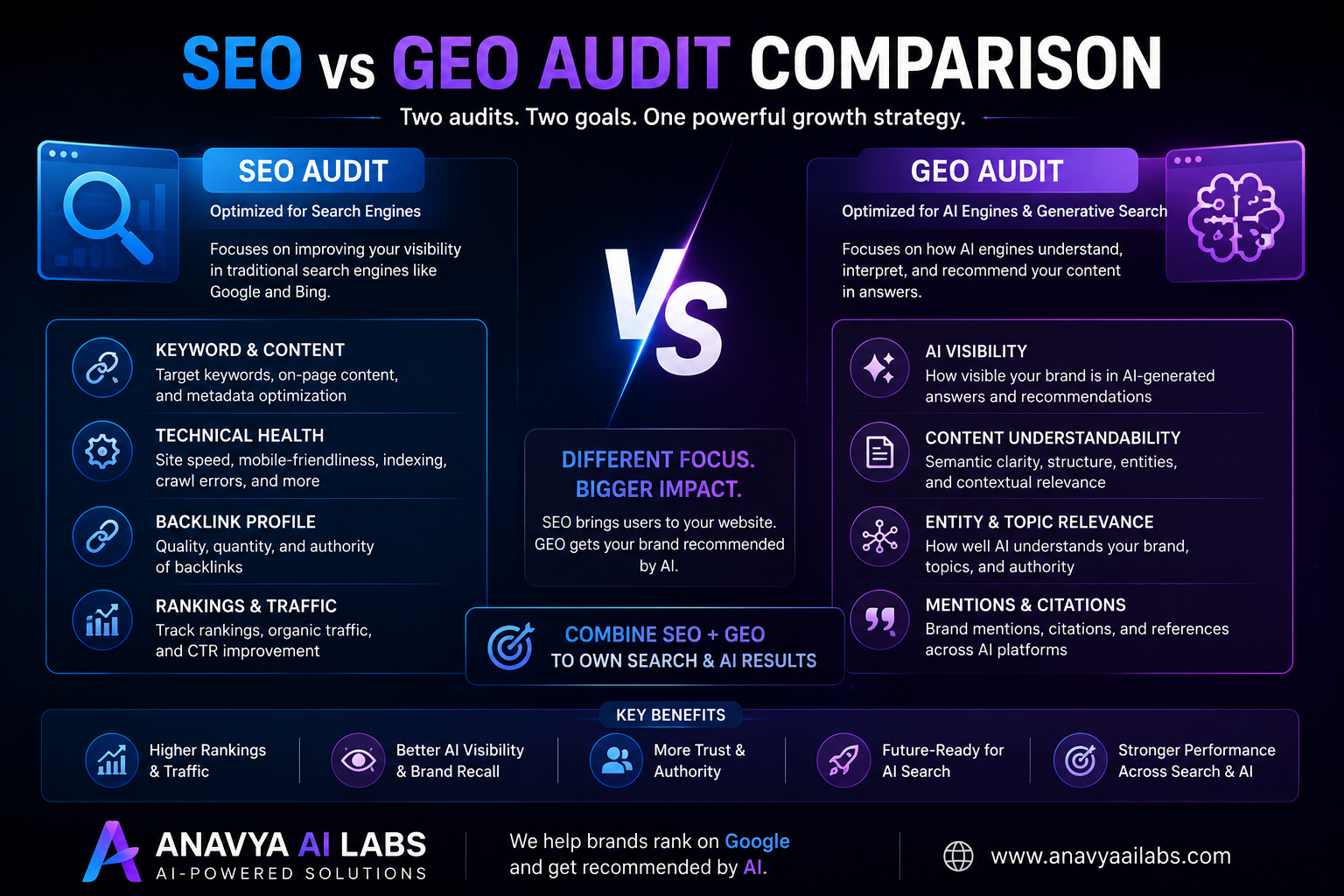
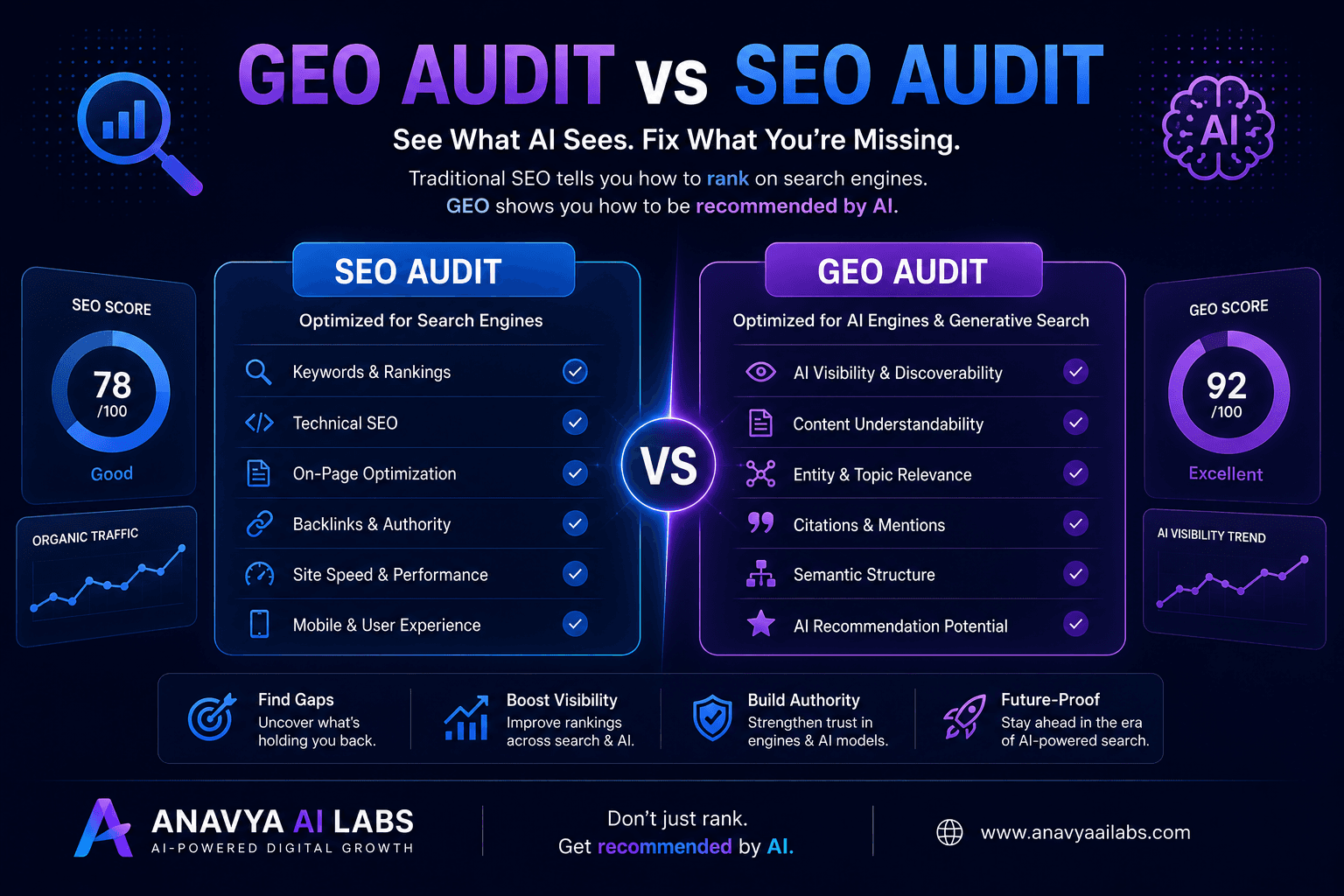
SEO and GEO audits measure fundamentally different things
SEO Audit asks: "Is your website technically optimized for search engine crawlers?"
GEO Audit asks: "Is your solution clearly the best choice for this customer's problem?"
This creates a critical insight: You can have perfect SEO and terrible GEO. Or vice versa. Most websites do.
Part 2: The 12 Critical Differences Between SEO and GEO Audits
1. Backlinks vs. Reviews
SEO Values: Backlink quantity, quality, and anchor text
GEO Values: Customer reviews, ratings, and testimonials
What This Means:
- SEO: Getting a link from TechCrunch is worth thousands of dollars in ranking power
- GEO: Getting 50 5-star customer reviews is worth more than 1000 backlinks
Audit Question for SEO: "How many quality backlinks do you have?"
Audit Question for GEO: "What's your average rating across platforms? How many reviews?"
Real Impact:
- Website A: 100 high-quality backlinks, 2.5/5 stars (20 reviews) = Poor GEO ranking
- Website B: 10 backlinks, 4.8/5 stars (500 reviews) = Excellent GEO ranking
2. Keyword Optimization vs. Problem-Solution Fit
SEO Values: Keyword placement, density, and relevance
GEO Values: How well you address customer problems
What This Means:
- SEO: Optimizing page titles and descriptions around keywords
- GEO: Explaining how your solution solves specific customer problems
Audit Question for SEO: "Are your target keywords in your H1, meta description, and first 100 words?"
Audit Question for GEO: "Do you explain the problem you solve before talking about features?"
Example:
- ❌ SEO-Only (Poor GEO): "Best project management software for teams"
- ✓ Both (Good GEO): "Eliminate project delays and miscommunication. Teams save 10+ hours per week with centralized project management. Manage timelines, resources, and communication in one place."
3. Domain Authority vs. Customer Authority
SEO Values: Domain age, link authority, page authority
GEO Values: Customer satisfaction, expert recognition, industry leadership
What This Means:
- SEO: Older domains with more backlinks rank higher (unfair to new companies)
- GEO: Better solutions rank higher (fair to innovative companies)
Audit Question for SEO: "What's your domain authority?"
Audit Question for GEO: "Are you recognized as an expert? Do customers trust you?"
4. Content Length vs. Content Clarity
SEO Values: Longer content ranks better
GEO Values: Clear, well-organized content ranks better
What This Means:
- SEO: 3,000+ words beats 1,000 words
- GEO: 2,500 words of clear content beats 5,000 words of confusing content
Audit Question for SEO: "Is your content long enough to rank?"
Audit Question for GEO: "Can an AI system easily understand your value proposition?"
5. Keyword Ranking vs. Intent Matching
SEO Values: Ranking for target keywords
GEO Values: Matching what users actually intend to find
What This Means:
- SEO: Optimize for "project management tool"
- GEO: Optimize for "what project management tool should a startup use?" (specific intent)
Audit Question for SEO: "How many keywords rank in top 10?"
Audit Question for GEO: "How well do you address specific user intents?"
6. Technical Perfection vs. Content Quality
SEO Values: Perfect technical implementation (speed, mobile, code)
GEO Values: High-quality, helpful content (depth, examples, results)
What This Means:
- SEO: Page speed under 2 seconds matters a lot
- GEO: Content that solves problems matters more than page speed
Audit Question for SEO: "What's your Core Web Vitals score?"
Audit Question for GEO: "What percentage of your content addresses customer problems?"
7. Link Velocity vs. Review Growth
SEO Values: How fast you gain backlinks
GEO Values: How fast you gain customer reviews
What This Means:
- SEO: Getting 100 backlinks in a month is significant
- GEO: Getting 100 customer reviews in a month shows real growth
Audit Question for SEO: "How many backlinks did you gain this month?"
Audit Question for GEO: "How many reviews did you gain this month?"
8. Feature Lists vs. Use Cases
SEO Values: Comprehensive feature lists rank for more keywords
GEO Values: Real use cases demonstrate problem-solving
What This Means:
- SEO: List every possible feature to rank for more keywords
- GEO: Show how features solve real customer problems with use cases
Audit Question for SEO: "How many features do you list?"
Audit Question for GEO: "How many real use cases do you document?"
9. Page Authority vs. Recommendation Confidence
SEO Values: Individual page authority from backlinks
GEO Values: AI confidence in recommending you
What This Means:
- SEO: A page with 10 quality backlinks ranks higher
- GEO: A page that clearly solves problems with customer proof ranks higher
Audit Question for SEO: "What's this page's authority score?"
Audit Question for GEO: "Would an AI confidently recommend this solution?"
10. Keyword Diversity vs. Problem Diversity
SEO Values: Targeting many keywords across pages
GEO Values: Addressing many customer problems
What This Means:
- SEO: Create content for "CRM," "sales software," "contact management"
- GEO: Document how CRM solves sales problems, forecasting problems, pipeline visibility
Audit Question for SEO: "How many keywords do you target?"
Audit Question for GEO: "How many customer problems do you solve?"
11. Crawlability vs. Comprehensibility
SEO Values: Can search engines easily crawl your content?
GEO Values: Can AI easily understand your value proposition?
What This Means:
- SEO: JavaScript rendering, crawlability, XML sitemaps
- GEO: Clear structure, semantic HTML, logical organization
Audit Question for SEO: "Can search engines crawl all your pages?"
Audit Question for GEO: "Can AI systems understand what you do?"
12. Local SEO vs. Global GEO
SEO Values: Local optimization (Google My Business, location pages)
GEO Values: Problem-specific visibility across all geographies
What This Means:
- SEO: Optimize for "plumber near me"
- GEO: Optimize for "best plumbing software for contractors" (not location-specific)
Audit Question for SEO: "Are you optimized for local searches?"
Audit Question for GEO: "Are you recommended globally based on solution quality?"
Part 3: The Complete Audit Framework
Step 1: SEO Audit Framework
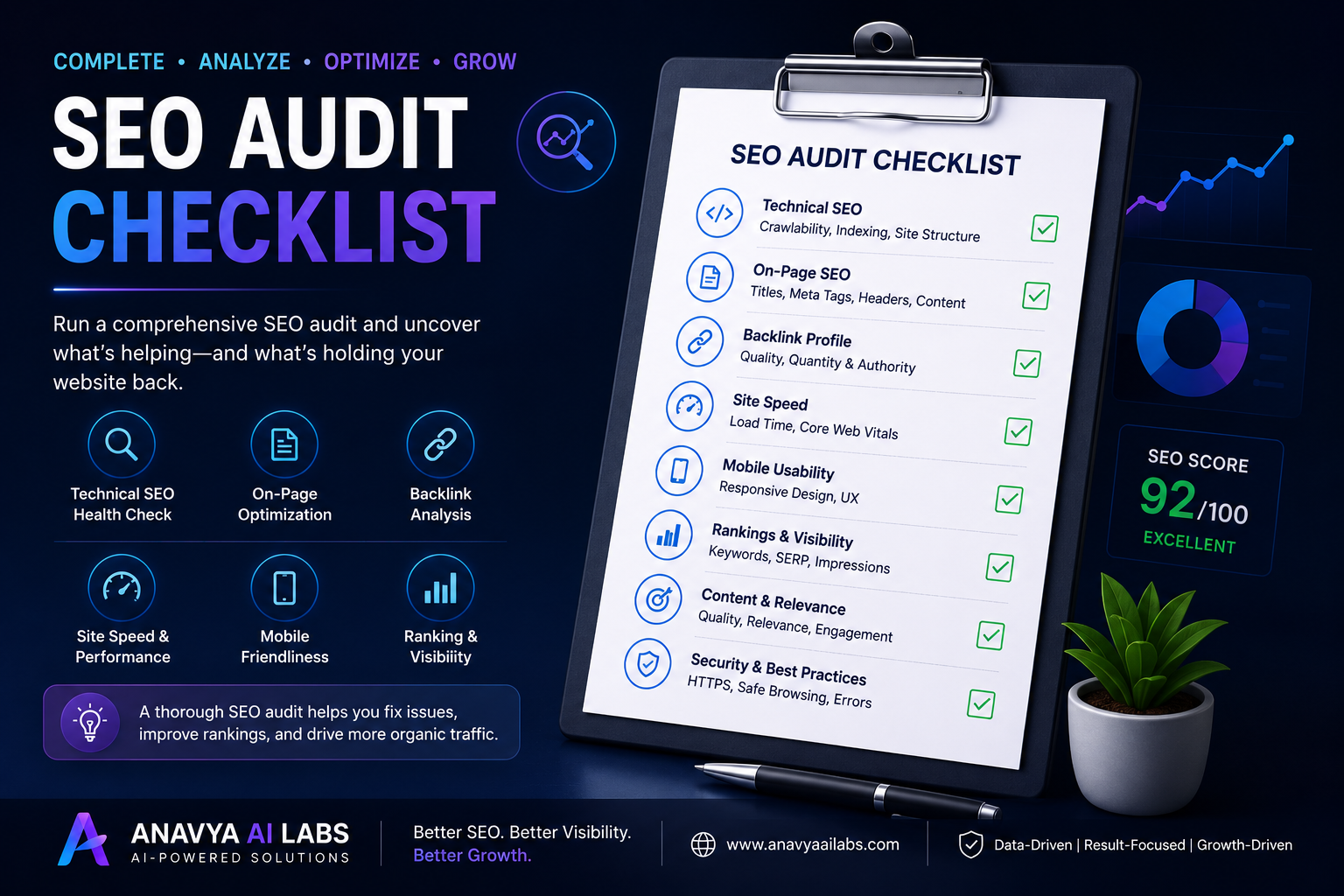
Comprehensive SEO audit ensures traditional search optimization
Technical SEO (25 points):
- Page load speed <2 seconds (mobile)
- Core Web Vitals passing
- Mobile responsive design
- SSL/HTTPS enabled
- XML sitemap present
- Robots.txt configured
- Structured data markup
- Internal linking audit
- Canonical tags implemented
- No crawl errors
On-Page SEO (35 points):
- Target keywords in H1 (main heading)
- Keywords in first 100 words
- Descriptive meta descriptions
- Proper heading hierarchy (H1→H2→H3)
- 2,000+ word content length
- Image optimization and alt text
- Internal links to related pages
- External links to authoritative sources
- LSI keywords incorporated
- Mobile preview optimization
Off-Page SEO (40 points):
- 50+ quality backlinks
- Domain authority 30+
- Referring domain diversity
- Anchor text diversity
- Brand mentions increasing
- Social signals present
- Guest posts on authority sites
- Directory listings
- Citation consistency
- Link velocity positive
SEO Audit Score: Add points (0-100)
Target: 75+ for strong SEO performance
Step 2: GEO Audit Framework
Authority & Credibility (40 points):
- 50+ customer reviews
- 4.5+ average rating
- Media mentions (3+)
- Customer testimonials (5+)
- Industry awards/certifications
- Company history documentation
- Team expertise highlighted
- Third-party validation
- Financial backing mentioned
- Partnership announcements
Content Quality (35 points):
- Clear problem-solution fit documented
- Semantic structure (logical hierarchy)
- 2,500+ word main content
- 5+ detailed use cases
- Competitive comparison page
- Before/after case studies
- Real customer success stories
- Measurable results documented
- FAQ addressing objections
- Step-by-step guides provided
User-Centric Factors (25 points):
- Pricing transparency
- Support options visible
- Integration ecosystem documented
- Implementation timeline clear
- ROI/value clearly communicated
- Customer testimonials with results
- Video content/demos
- Onboarding resources
- Community presence
- Response rate to reviews
GEO Audit Score: Add points (0-100)
Target: 75+ for strong GEO performance
Part 4: What Your Website Is Likely Missing
The Audit Gap Analysis
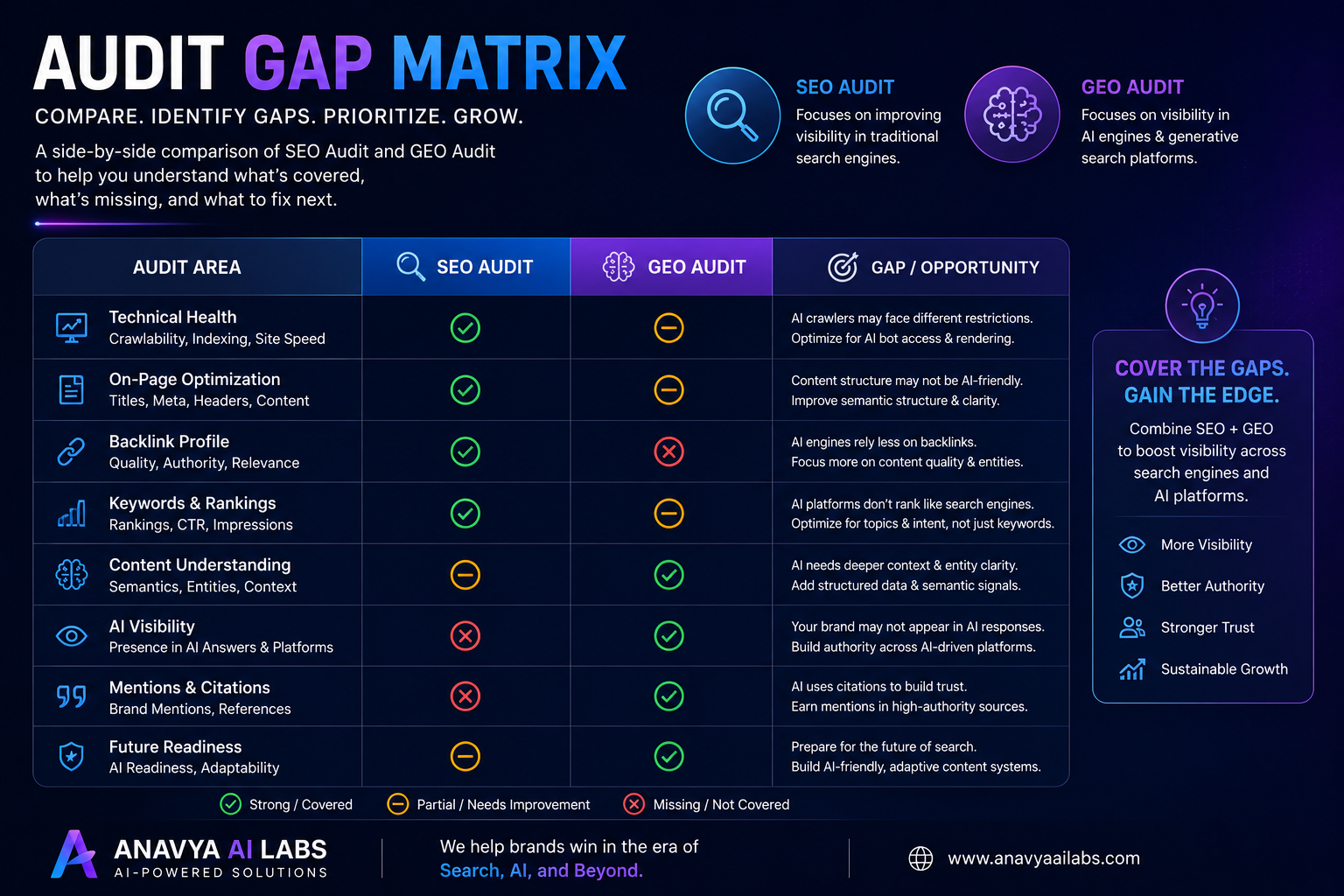
The gap between SEO optimization and GEO optimization represents your opportunity
If Your Website Has Perfect SEO (Score: 90), Likely GEO Score: 35-45
Missing from GEO:
- ❌ Limited customer reviews (0-20 reviews)
- ❌ Generic product messaging (feature-focused)
- ❌ No competitive comparison
- ❌ Missing use case documentation
- ❌ Minimal customer testimonials
- ❌ No case studies with results
- ❌ Limited media mentions
- ❌ Unclear problem-solution fit
If Your Website Has Perfect GEO (Score: 90), Likely SEO Score: 50-60
Missing from SEO:
- ❌ Limited backlink profile
- ❌ Lower domain authority
- ❌ Basic technical SEO
- ❌ Keyword optimization missing
- ❌ Less link velocity
- ❌ Lower social signals
- ❌ Fewer guest posts/citations
The Opportunity: Most companies optimize for SEO. Very few optimize for GEO. This means the gap is where you win.
Part 5: Real-World Case Study
Company: SaaS Platform Moving from SEO-Only to SEO + GEO
Starting Position:
- SEO Score: 85 (Strong)
- GEO Score: 35 (Weak)
- Google traffic: 5,000 visitors/month
- AI traffic: 50 visitors/month (barely mentioned)
6-Month GEO Optimization:
Months 1-2: Authority Building
- Collected 75 customer reviews (achieved 4.6/5)
- Published 5 customer testimonials with results
- Secured 2 media mentions
Months 3-4: Content Restructuring
- Rewrote 10 key pages around problems not features
- Added competitive comparison pages
- Published 5 detailed use case guides
Months 5-6: Customer-Centric Marketing
- Published 3 customer case studies (with ROI metrics)
- Expanded documentation to address common questions
- Created before/after transformation guides
Results (Month 6):
- ✓ SEO Score: 87 (maintained)
- ✓ GEO Score: 76 (doubled!)
- ✓ Google traffic: 5,200 visitors/month (slight growth)
- ✓ AI traffic: 1,500+ visitors/month (30x growth!)
- ✓ Total new customers: 45 (vs. 20 before)
- ✓ Average deal size: $12,000 (customer quality improved)
Key Insight: AI-referred customers converted at 18% (vs. 8% from Google). AI discovery prioritized qualified, intent-matched prospects.
Part 6: The Implementation Roadmap
This Week
- Complete SEO audit (use framework above)
- Complete GEO audit (use framework above)
- Calculate audit gap (SEO score - GEO score)
- Test: Ask ChatGPT/Claude what they know about you
- Document current review count and rating
This Month
- Launch review collection campaign (target: 25 reviews)
- Identify 3 key pages for problem-focused rewrite
- Collect 5 customer testimonials with permission
- Create 1 detailed case study with metrics
- Audit messaging for problem-vs-feature focus
This Quarter
- Achieve 50+ reviews (target 4.5+/5 stars)
- Rewrite 10 key pages problem-first
- Publish 5 customer use cases/success stories
- Create competitive comparison framework
- Generate 2-3 media mentions
- Build out case study library
Next Quarter
- Achieve 100+ reviews (target 4.7+/5 stars)
- Expand all documentation around customer problems
- Establish thought leadership (speaking, content)
- Build recurring media relationships
- Achieve GEO score 80+
- See 3-5x increase in AI-referred customers
Part 7: Integrating SEO and GEO
How to Optimize for BOTH Simultaneously
Most companies treat SEO and GEO as separate initiatives. The winning approach integrates both:
Strategy 1: Problem-First Content
- Write for GEO first (customer-problem focused)
- Optimize for SEO second (keyword placement)
- Result: Content that ranks in Google AND gets recommended by AI
Strategy 2: Customer Proof First
- Document real customer results (for GEO)
- Optimize messaging for keywords (for SEO)
- Result: Authority that signals to both search engines and AI
Strategy 3: Audit Regularly
- Run SEO audit quarterly (catch technical issues)
- Run GEO audit quarterly (track customer authority)
- Result: Both signals improve over time
Conclusion: Both Matter in 2026
The companies dominating customer acquisition in 2026 aren't choosing between SEO and GEO. They're optimizing for both simultaneously.
The SEO-Only Strategy:
- Ranks on Google #1
- Invisible in AI systems
- Limited AI-referred customers
- Results: Mediocre growth
The GEO-Only Strategy:
- Recommended by AI systems
- Doesn't rank on traditional search
- Strong AI customers, but limited market
- Results: Good growth, but incomplete
The SEO + GEO Strategy:
- Ranks on Google AND recommended by AI
- Visible in traditional and AI search
- High-quality customers from both channels
- Results: Dominant market position
The companies starting their GEO audit NOW will be the market leaders by 2027.
Your Next Step: Run Both Audits This Week
Use the audit frameworks above to score your website on both SEO (0-100) and GEO (0-100). The gap between these scores is your opportunity.
A 50+ point gap means you're leaving massive customer acquisition on the table.
Ready to audit? Run an AI scan to benchmark your GEO score against competitors.
Last Updated: August 31, 2026
Read Time: 13 minutes
Focus Areas
GEO Audit
SEO Audit
Search Optimization
AI Visibility
GEO Strategy
Content Audit
Website Audit
AI Search
ChatGPT Optimization
Claude Visibility
Perplexity Search
Semantic Search
Content Strategy
Authority Building
Review Management
Brand Visibility
Search Ranking
AI Discovery
Content Optimization
Website Optimization